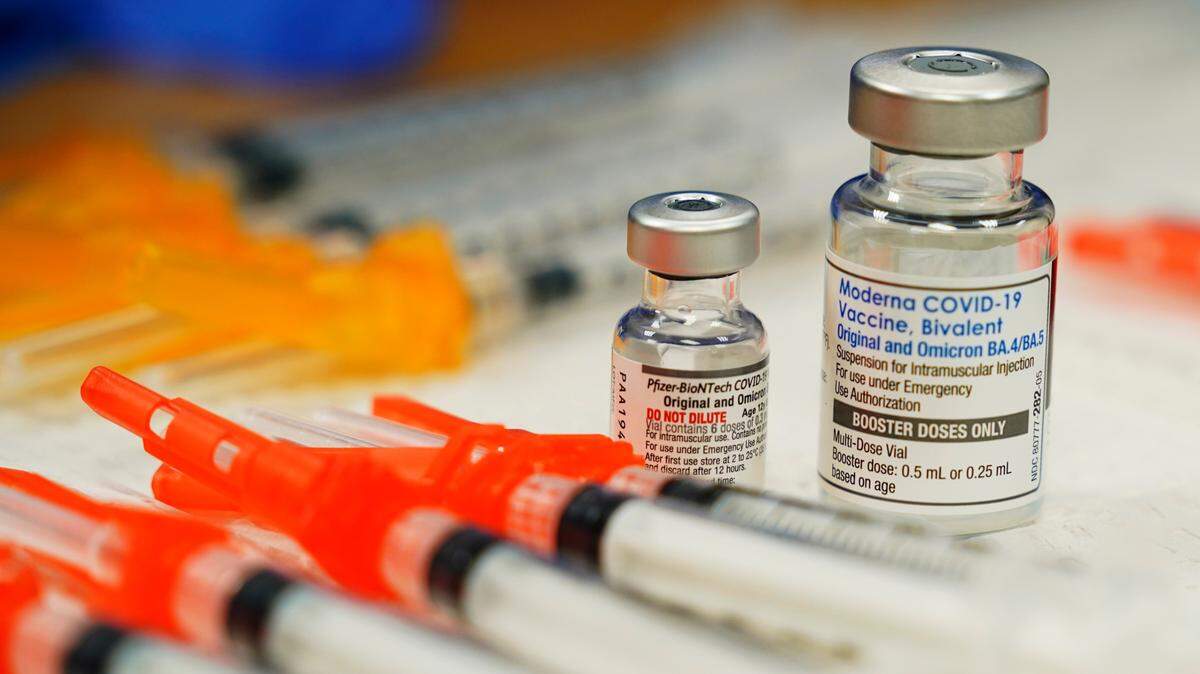
One of the most difficult aspects of one’s life is going through times of uncertainty. This past year was the epitome of uncertainty and continues to be as such. With the world still struggling to curtail the spread of Covid-19, people have been struggling to look for answers on how to navigate through their lives. This difficulty has only been compounded by the overflow of information/misinformation throughout the news and social media platforms. From amongst the most contested issues Muslims have been facing is the rollout of the Covid-19 vaccines.
We have all likely received multiple messages or had heated discussions with mixed views on the Covid-19 vaccines. With every passing day, a new “expert” or someone with “insider information” has a new conspiracy theory regarding the coronavirus and the multiple vaccines for it which have been released. Claims range from the vaccine having trackers to the purpose of it being to alter human DNA. Furthermore, as the distribution and rollout of the vaccines continue to expand, the information disseminating has only increased. This slew of information has put Muslims in a conundrum as to whether or not they should consider taking the vaccine and adopting precautionary measures or not?
However, as is the case with conspiracy theories, one becomes so consumed in verifying or refuting them that they tend to lose sight of the bigger picture, which in this case is: what is the Islamic perspective of vaccines and precautionary measures? Below we will discuss some of the more common questions Muslims have about vaccines and medication in general.
It should be noted that the purpose of this article is not to attempt to verify or refute any conspiracy theories nor to give medical advice. Rather, it is to look at the Islamic perspective of medication and vaccinations in a general sense.
Is it necessary for me to take medicine or seek treatment in Islam?
From the outset, it should be understood that there are two types of illnesses: fatal and non-fatal. In the cases of fatal illnesses, the ruling for adopting treatment or taking medicine would depend on the efficacy of the treatment:
1) Treatment whose efficacy is certain or near-certain: it would be necessary (wajib) to adopt such treatment.
2) Treatment whose efficacy is not certain but offers reasonable hope (fifty percent or higher) that one will recover: it is recommended to accept such a treatment although it is not necessary.
3) Treatment whose efficacy offers less than fifty percent chance of recovery: it would be permissible to try such treatment although not encouraged.
In cases where the illness is not fatal, it would be recommended to take medicine if its efficacy offers at least reasonable hope. Otherwise, it would be only permissible though not encouraged.
Note: It should be noted that the above rulings are default rulings and do not take external factors to account. Factors such as side effects, the contagiousness of the disease, etc. could potentially change the ruling in certain circumstances.
Why not just trust Allah to cure me?
Similar to how a person works to earn their livelihood or eats to satiate their hunger, in Islam a person is expected to adopt measures and means to achieve their goals. Islam demands a balance between extreme fatalism and an overreliance on worldly means. The Messenger of Allah ﷺ not only adopted treatment himself, he also encouraged Muslims to seek treatment. Consider the following hadith:
Usama bin Sharik narrates that a group of Bedouins asked the Messenger of Allah ﷺ, “Is there is any issue if we choose not to take treatment or medication?”
The Messenger of Allah ﷺ replied, “O slaves of Allah! Take medication. With the exception of old age, Allah has not placed any disease (on earth) except that He has also put with it its cure.” (Ibn Majah)
What does Islam say regarding preventative measures?
When looking at the Sunnah, we find that not only did the Messenger of Allah s adopt preventative measures himself, he also encouraged it. However, he would also sometimes purposely defy preventive measures to prove a point: the ultimate power of causation lies in the hands of Allah. Consider the following ahadith as a few examples:
Abu Hurayrah reports that the Messenger of Allah s said, “Flee from a leper similar to how you would flee from a lion.” (Bukhārī)
Usama bin Zayd reports that the Messenger of Allah ﷺ said, “If you hear of a plague in a land, then do not enter it. And if a plague appears in a land where you reside, then do not leave it.” (Bukhari)
Abu Hurayrah reports that the Messenger of Allah ﷺ said, “Do not bring diseased camels into contact with healthy camels.” (Bukhari)
Jabir bin Abdullah reports that the Messenger of Allah ﷺ took a leper’s hand and placed it in the bowl (he was eating from). He then said, “Eat in the name of Allah while placing your full trust in him.” (Tirmidhi)
From the above narrations, the following points can be deduced:
1) Islam is not a fatalist religion. Many Muslims have mistaken fatalism for religiosity and purposely defy preventative measures as a form of expressing piety. There are even those who condemn or belittle others for adopting such measures and accuse them of not trusting Allah to protect them. The Messenger of Allah ﷺ, himself, along with asking Allah for protection, took preventative measures and encouraged others to do so. Thus, if a person really wants to follow the sunnah, it would be to adopt preventative measures along with placing one’s complete trust in Allah.
2) Precautionary measures are not religiously binding. Rather, they are at the level of a recommendation. Thus, a person not adopting precautionary measures would not be sinful and should not be condemned as such. It should be noted, however, that sometimes precautionary measures can become more emphasized or even binding due to external factors.
3) The ultimate power of causation is in the hands of Allah. Islam does not deny causality or the phenomena of cause and effect, rather the aforementioned ahadith clearly affirm it. However, the effect from causes are not innate nor autonomous. They are subject to the will of Allah. Thus, if Allah wishes, He may negate an effect or He may bring it into existence without any cause at all.
Would adopting precautionary measures be against tawakkul?
It is necessary for every Muslim to have unwavering trust in Allah. This unwavering trust is known as tawakkul and has been emphasized throughout the Qur’an and Sunnah. Adopting precautionary measures does not contradict placing one’s trust in Allah. This point can clearly be deduced from the following hadith:
Anas reports that a person asked the Messenger of Allah ﷺ, “O Messenger of Allah! Should I tie my camel and then place my trust in Allah or should I leave it untied and then place my trust in Him?”
The Messenger of Allah ﷺ replied, “Tie your camel and then rely on Allah." (Tirmidhi)
What if the medication contain haram ingredients?
In principle, anything entering a person’s body must be halal. This principle is applicable for food, drinks, and medications (including vaccines). The Messenger of Allah, himself, clearly makes this clear in the following hadith:
Abu Darda reports that the Messenger of Allah ﷺ said, “Verily Allah has created the disease and the cure and has created a cure for every disease. Therefore, seek treatment but do not seek treatment from haram.” (Abu Dawud)
As such, if a person is prescribed medication which contains haram ingredients, it would be necessary for him/her to seek a halal alternative. One may refer to a Muslim physician or pharmacist in this regard.
However, it should also be noted that there are some narrations which show that the Messenger of Allah allowed certain people to take haram medication in cases where there were no other halal alternatives. As such, the fuqaha have mentioned that the default ruling for medications would be that they must be halal. However in cases of necessity where there are no other alternatives, there would be leniency in taking medication which contains haram ingredients. As for what constitutes a valid necessity and what does not, this would need to be looked at on a case-by-case basis. Therefore, a person should refer to their local scholars for specific cases.
What about the side effects?
The Messenger of Allah ﷺ instructed Muslims to avoid harming themselves or others. This body we have been given is entrusted to us by Allah, thus we are not permitted to purposely harm ourselves. As such, short-term and long-term side effects are a factor to consider when determining whether one should take certain medications. However, not all types of harm are equal or would render medication haram. In principle, if the benefits outweigh the harms or the harm is negligible, it would be permitted to use such medication.
So should I get vaccinated?
As mentioned at the beginning, the purpose of this article is to analyze medical treatment and preventative measures from an Islamic perspective. Although vaccines are a form of preventative treatments and would fall under the general principles of adopting preventative measures, whether or not a person should take a specific vaccine is a personal question which would need to be looked at on a case-by-case basis. The reason for this is that there are various factors which would need to be considered, such as the type of vaccine, the age of a person, pre-existing conditions, allergies, potential long-term and short-term side effects, etc. Therefore, a person should refer such questions to a reliable Muslim physician who would be able to advise them accordingly.
But what about the conspiracy theories?!
The purpose of this article is not to refute or confirm any conspiracy theory. In regards to what a Muslim’s approach should be to conspiracy theories in general, it should be noted that conspiracy theories are of two types:
1) Conspiracy theories which do not have a practical impact on one’s life. To actively engage one’s self in confirming or refuting such theories is futile and against the teachings of Islam. The Messenger of Allah ﷺ said, “It is from the beauty of a person’s Islam for him/her to leave that which does not concern them.” (Abu Dawud)
For example, was Neil Armstrong actually the first person to walk on the moon or was the entire thing staged? This is an issue which does not affect anyone nor would there be any benefit in actively spending time investigating it.
2) Conspiracy theories which make a practical difference to one’s life. For example, does a certain coronavirus vaccine cause certain side effects which are not commonly known? This is an issue which could potentially affect a person and impact his/her life. It would be permissible to look into such arguments provided there is reasonable basis for doubt. However, one must exercise extreme caution in vetting their source of information whether it is credible or not. To disseminate misinformation or speak on issues one is not qualified to speak on could have grave consequences. Consider the following incident of the companions l:
Jabir reports, “We were on a journey and a person from among us was hit by a stone which caused an injury in his head. Later on, this person experienced a wet dream after which he asked his companions if there would be any leniency in doing tayammum (due his head injury) instead of performing ghusl. They responded, “We do not think that there would be any leniency in this matter since you have access to water.” The man then bathed and died.
When we returned to the Messenger of Allah ﷺ and informed him of what happened, he said, “They killed him! May Allah kill them! When they were unsure (of the ruling), why did they not ask? The only cure for ignorance is to ask.” (Abu Dawud)
The anguish and sorrow of the Messenger of Allah ﷺ can vividly be seen in this hadith. The reason for the anger was that there was a preventable death which was caused by unqualified advice. The lesson from the hadith is simple: the information we pass on and the advice we give has consequences. If we are unqualified to pass judgment, it is absolutely necessary for us to avoid giving our opinions on matters, especially in matters which may lead to the loss of life.
Above were some common questions one may have regarding medications and preventative measures in general. In such uncertain times where it has become difficult to discern truth from falsehood, it is imperative that instead of focusing on juicy conspiracy theories and interesting storylines, we instead focus on what Allah wants from us during this time and what we should be doing to please Him. O Allah! Give us the ability to recognize the truth as the truth and give us the ability to follow it. And allow us to recognize falsehood as falsehood and grant us the ability to refrain from it. Ameen.